
The Code-Share Flight Illusion: Are You Flying the Airline You Paid For?
You just paid $3,500 for a Business Class ticket on American Airlines. You hold elite status, you love their Flagship Lounge, and you specifically chose a flight number starting with “AA”. But when you arrive at the gate at JFK, you are not boarding an American Airlines jet. Instead, you are funneling into an aging British Airways aircraft with a completely different seating configuration, and your elite status suddenly feels invisible.
Welcome to the code-share illusion.
While airlines market code-share flights as a seamless global network, behind the scenes, it is a complex web of competing IT systems, misaligned fare classes, and compromised passenger experiences.
If you want to control your travel logistics, you need to stop looking at the logo on your receipt and start understanding the difference between a “Marketing Carrier” and an “Operating Carrier.” Here is the flight engineer’s guide to navigating airline code-share agreements without losing your seats, your status, or your sanity.
Why Airlines Use Code-Shares (The Financial Math)
Airlines use code-share agreements to expand their global route network without taking on the massive capital expenditure of buying new aircraft or paying for airport slots.
If Delta wants to sell tickets to a secondary city in Europe but doesn’t have the demand to fly its own $250 million Airbus A350 there, they simply place their “DL” flight code on an existing Air France flight. Delta (the Marketing Carrier) takes a cut of the revenue, and Air France (the Operating Carrier) fills an empty seat.
Financially, it is a brilliant yield management strategy. Logistically, for the passenger, it can create a fragmented experience.
The GDS Disconnect: Why You Get the “Seat Selection Unavailable” Error
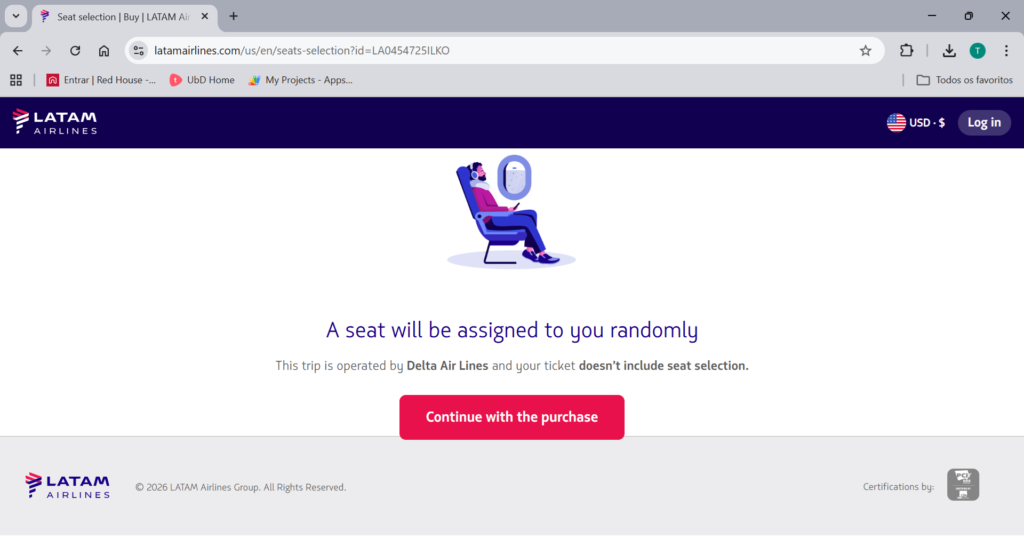
The most immediate friction point of a code-share flight happens right after you book: you cannot select your seat.
You log into the American Airlines app to pick your aisle seat, only to be met with a frustrating greyed-out map and the message “Seat Selection Unavailable.” This is not a glitch; it is an IT communication failure between rival Global Distribution Systems (GDS).
American Airlines relies on the Sabre system, while British Airways operates on Amadeus. When you book through American, their system often lacks real-time visibility into the Amadeus seat map. If you do nothing, the operating carrier (British Airways) will automatically assign you a seat at check-in—which almost guarantees you will be stuck in a middle seat near the lavatories.
The Engineering Fix: Never wait for check-in. Call the marketing carrier (in this case, American) and ask the agent to manually ping the partner’s seat map. If the systems still reject it, ask the agent for the Operating Carrier’s PNR (Passenger Name Record). Your booking actually generates two separate confirmation codes. Once you have the British Airways PNR, you can log directly into their website and bypass the system block to secure your seat.
The Hard Product Gamble and Equipment Swaps
When you buy a code-share ticket, you are agreeing to the operating carrier’s “hard product” (the physical seat, the cabin layout, the aircraft age).
While joint ventures (like Delta x LATAM Airlines or Delta x Aeroméxico) are highly structured to align passenger experiences, discrepancies still happen. The biggest risk is an uncommunicated equipment swap. The operating carrier might switch the aircraft from a wide-body jet to a narrow-body due to operational needs. Because they prioritize their own direct customers, the marketing carrier (who sold you the ticket) is often the last to know, leaving you with a mismatched seat assignment.
Furthermore, when it comes to operational upgrades or waitlists, loyalty has borders. If you are an American Airlines elite flying on a British Airways operated flight, BA’s algorithm will mathematically prioritize its own Executive Club elites over you, even if you are in the same alliance.
The Fare Class Translation Error
This is the technical trap that catches even the most seasoned corporate travel agents.
When you buy a ticket, you aren’t just buying “Business Class”—you are buying a specific alphabetical fare bucket. Because airlines use different GDS platforms, these letters must be translated between partners. Usually, it works seamlessly, but translation errors still occur.
A classic industry example is the “R” Fare Class. If you book an ‘R’ class ticket on a carrier using Sabre, the system registers it as an entry-level Business Class fare. However, when that data is pushed to a partner airline using Amadeus, their system might interpret the ‘R’ class as an intermediate Economy or Premium Economy fare.
If this translation error isn’t caught before you reach the airport, you will be downgraded at the gate, and the agents will point fingers at each other’s IT systems. While airlines are actively patching these GDS translation glitches, the risk remains.
How to Engineer a Code-Share Flight Booking
To protect your travel investment, apply these three rules before clicking purchase:
- Spot the “Operated By” Tag: Never blindly trust the flight number. Look for the small gray text underneath the flight time that says “Operated by [Airline]”.
- Audit the Hard Product: Once you know the operating carrier, use tools like SeatGuru or Aerolopa to verify the exact cabin configuration of their aircraft. Do not assume it matches the airline you are buying the ticket from.
- Extract the Second PNR: Immediately after booking, find the operating carrier’s 6-digit alphanumeric record locator. Log into their system to secure your seats and verify your frequent flyer number is properly attached.
Stop letting the algorithm dictate your comfort. By understanding the logistics behind code-share flights, you ensure you actually get the product you paid for.