
The Tuesday Myth: How Airline Yield Management Sets Prices (And the Best Time to Book)
If you’ve ever Googled “the best day to buy airline tickets,” chances are you’ve read the same recycled advice: buy on Tuesdays, wake up at 3 a.m., or clear your cookies before searching.
As a travel engineer who analyzes aviation cost structures and routing logistics, let me be brutally honest: most of that is complete myth. There is no analyst sitting in a dark room manually lowering flight prices every Tuesday at midnight.
If you want to stop chasing internet folklore and start booking smarter, you need to understand the mathematical reality behind the curtain. Today, I am lifting the veil on how airline yield management sets prices, the absolute laws of inventory control, and the real statistical windows you should be targeting.
1. The Tuesday Myth vs. The Yield Management Reality
The idea that Tuesday is the cheapest day to buy a ticket is a relic from the 1990s. Back then, airline executives would manually load their new fare sheets into the Global Distribution Systems (GDS) on Monday afternoons. Competitors would see these prices and adjust their own fares by Tuesday morning to stay competitive.
Today, that manual process is dead.
I see the reality of ticket pricing every single day. In my role overseeing commercial and financial operations for a major international airline, I know exactly how the system is rigged. Every morning, when I open our internal Looker Studio dashboards—fed directly by massive BigQuery sales databases—I am not looking at what day of the week it is. I am looking at the booking curves. We track real-time KPIs, segmented by point-of-sale and domestic vs. international markets, to instantly flag which specific flights are over-performing or under-performing their historical forecasts.
The truth is, the era of human analysts sitting in a room manually tweaking fares on a Tuesday afternoon is dead. In modern aviation, pricing is governed by sophisticated Revenue Management (RM) algorithms operating 24/7. These systems process millions of data points in milliseconds, constantly optimizing the PRASM (Passenger Revenue per Available Seat Mile) against the flight’s real-time load factor.
The algorithm doesn’t care when you hit ‘search’. If a flight’s booking velocity outpaces its curve, the AI automatically closes the lower fare buckets and raises the price—whether it’s a Sunday afternoon or a Tuesday at 3 a.m. Pricing is no longer tied to the calendar; it is strictly driven by inventory velocity.
Pricing is no longer tied to the calendar; it is strictly driven by inventory velocity.
Instead of asking what day to buy, you must ask how full the flight is on the day you want to travel. The algorithm’s only goal is to maximize the revenue of every single seat before the boarding door closes. If a flight is selling faster than the historical curve predicts, prices rise—even if it’s a Tuesday.

2. The Advance Purchase Rule: Why Prices Jump Overnight
If you want to know how airline yield management sets prices, you must understand the concept of Advance Purchase (AP) Fences.
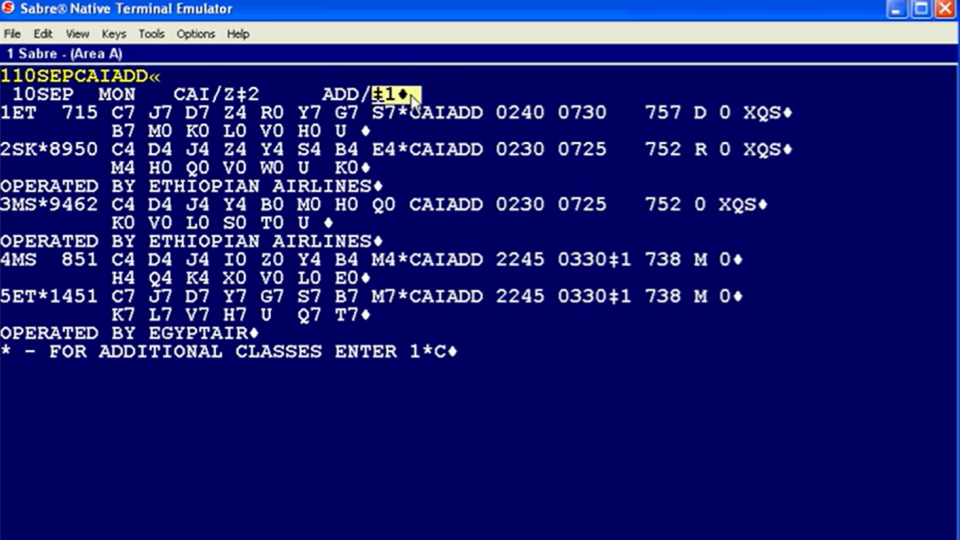
Airlines divide their airplane seats into “Fare Buckets” (represented by letters like Y, J, O, Z). The cheapest buckets are designed for leisure travelers who plan ahead. The most expensive buckets are reserved for desperate corporate travelers who book at the last minute.
To separate these two types of buyers, airlines code hardcoded deadlines into the system. These are the AP Fences, and they typically trigger exactly at:
- 7 Days before departure
- 14 Days before departure
- 21 Days before departure
Let’s look at a practical GDS scenario. Imagine you are tracking a discounted leisure ticket (let’s say, an ‘O’ class Fare Bucket). At 11:59 PM on the 22nd day before departure, that ticket might be sitting at $250. Exactly one minute later, at midnight on the 21-day mark, the system automatically executes the Advance Purchase fence. The ‘O’ class bucket is hard-closed globally.
The algorithm instantly defaults to the next available tier—a mid-level ‘M’ class bucket—and the price jumps to $450. The system didn’t raise the fare because you refreshed your browser or didn’t clear your cookies; it raised it because you crossed a non-negotiable contractual deadline designed to extract maximum revenue from last-minute corporate travelers.
If you are booking a flight less than 21 days out, you are no longer fighting the algorithm; you are fighting a hardcoded corporate penalty.
3. The Goldilocks Window: The Real Best Time to Book
A common mistake even smart travelers make is buying tickets the exact day the flight schedule opens (usually 330 days in advance).
When a flight first opens, the algorithm has zero data on actual demand for that specific date. To protect their revenue, airlines block the cheapest promotional fare buckets and only sell mid-to-high tier tickets. Booking a year in advance means you are paying an “anxiety premium.”
So, when is the actual sweet spot? We call it the Goldilocks Window.
The Statistical Booking Windows for 2025/2026:
- International Long-Haul (Peak Summer/December): 6 to 10 months before departure.
- Domestic Flights (Off-Peak): 1 to 3 months before departure.
- Domestic Flights (Peak Season/Holidays): 3 to 6 months before departure.
- International Long-Haul (Off-Peak): 2 to 5 months before departure.
Take my own family’s European road trip that we did in July 2025 through Germany, Austria, Switzerland and France as a benchmark. Peak European summer is notoriously ruthless on pricing. By executing the purchase exactly 8 months in advance—hitting the exact center of the long-haul Goldilocks Window—I secured a locked Base Fare of just $1,045 per person on LATAM Airlines for a multi-city route.
If I had waited until the standard 3-month mark that most tourists use, the revenue algorithm would have already detected the aggressive summer booking curve, automatically closed the discounted leisure fare buckets, and forced me into a premium bucket, easily doubling the cost. I didn’t get lucky; I simply locked the inventory before the algorithm panicked.

4. Strategic Tools to Beat the System
Understanding how airline yield management sets prices is your foundation. Executing the purchase requires the right tools.
Exploit the 24-Hour Rule: In the US, the DOT mandates that airlines allow you to cancel a non-refundable ticket within 24 hours of booking without penalty (if booked 7 days in advance). If you lock in a good fare, keep tracking it for 24 hours. If the algorithm drops it further, cancel and rebook.
Set Automated Price Alerts (Google Flights / Hopper): Let their algorithms fight the airline’s algorithms. Track your specific dates during the Goldilocks Window and buy when the tracking graph shows the price has hit the historical bottom.
Audit the Airport Taxes: As I teach in my routing strategies, sometimes the base fare is cheap, but the departure tax is astronomical (like flying out of London LHR vs. Paris CDG). Always analyze the final checkout price, not just the initial search result.
Final Thoughts: Stop Guessing, Start Engineering
The real best day to buy airline tickets isn’t a day of the week—it’s a mathematical window governed by Advance Purchase rules and real-time demand.
As a travel engineer, I can tell you that chasing the “Tuesday at midnight” ghost will only cost you money. Focus on the 21-day hard deadlines, buy within the statistical Goldilocks Window, and always structure your routing to avoid heavy airport taxes.
If you want to stop guessing and start engineering your travel logistics, you need to understand exactly how the system is rigged.